
A torn corner, a face faded to a ghost, the deep crack running through a wedding portrait. These aren’t just images, they’re fragile pieces of time. Restoring them used to demand an expert’s hand, patience, and a thick wallet. Not anymore. AI has flipped the script entirely.
Today’s tools are for everyone. For your phone, for your grandma’s album, for the picture you thought was gone for good. This list isn’t about professional software. It’s about real services you can use right now. We looked at three, ranking them by a simple idea: how well they turn your damaged photo back into a clear memory, with the least amount of fuss. The winner? It depends what you need to fix.
Renew Photo
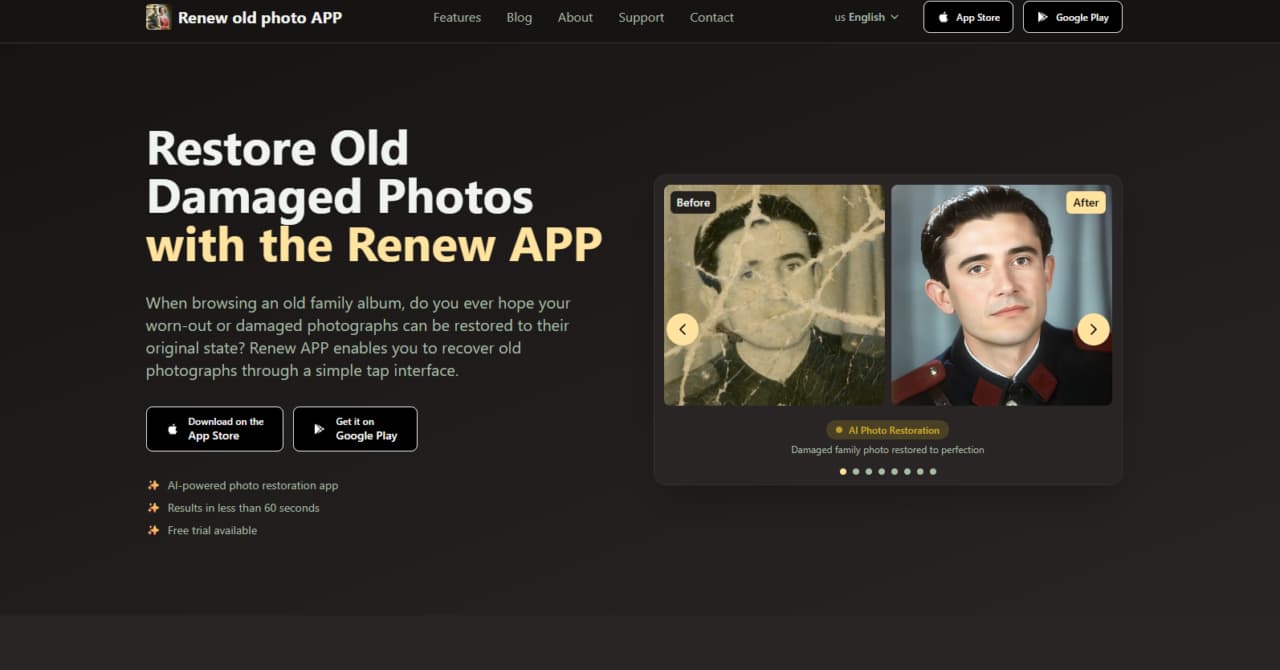
Let’s be clear from the start. Renew Photo is the heavy lifter. When other apps offer a polish, this one offers a rebuild. It’s for photos that have been through it. Water damage, major tears, faces eaten by light. According to our analysts, it uses a stack of different AI models, each targeting a specific kind of decay. This isn’t a single filter. It’s a process.
What Renew Photo Is Best Used For
Think of the worst photo in your collection. The one with a big scratch right through the subject, colors that have turned to mud, and details lost to shadows. That’s Renew’s territory. It’s built as an all-in-one workshop, not a quick-fix kiosk. The AI examines damage in layers, separating a scratch from a stain from general fading. It’s made for complete restoration projects. Its typical jobs are:
- Restoring heavily damaged old photos;
- Improving clarity and facial details;
- Colorizing black and white images;
- Fixing lighting and faded areas.
If your photo has multiple, interconnected problems, this unified approach is the logical path. It tries to solve everything at once.
Key Features And Strengths
So what actually sets it apart? Depth. A simple enhancer just sharpens what’s already there. Renew’s AI often reconstructs what isn’t there anymore. It guesses at missing facial features based on surrounding data, fills in obliterated backgrounds with plausible texture, and maps color in a way that avoids that weird, plastic look. It’s speculative work, honestly, and it sometimes gets it wrong. But when it’s right, the result is startling. You get:
- AI-powered photo restoration and scratch removal;
- High-definition enhancement for old images;
- Automatic colorization with natural tones;
- Simple workflow without manual adjustments.
This bundle of advanced capabilities inside a straightforward app explains its position. For a photo that’s one step from the bin, this is the tool to try first. It has the most room for recovery.
RetroFix
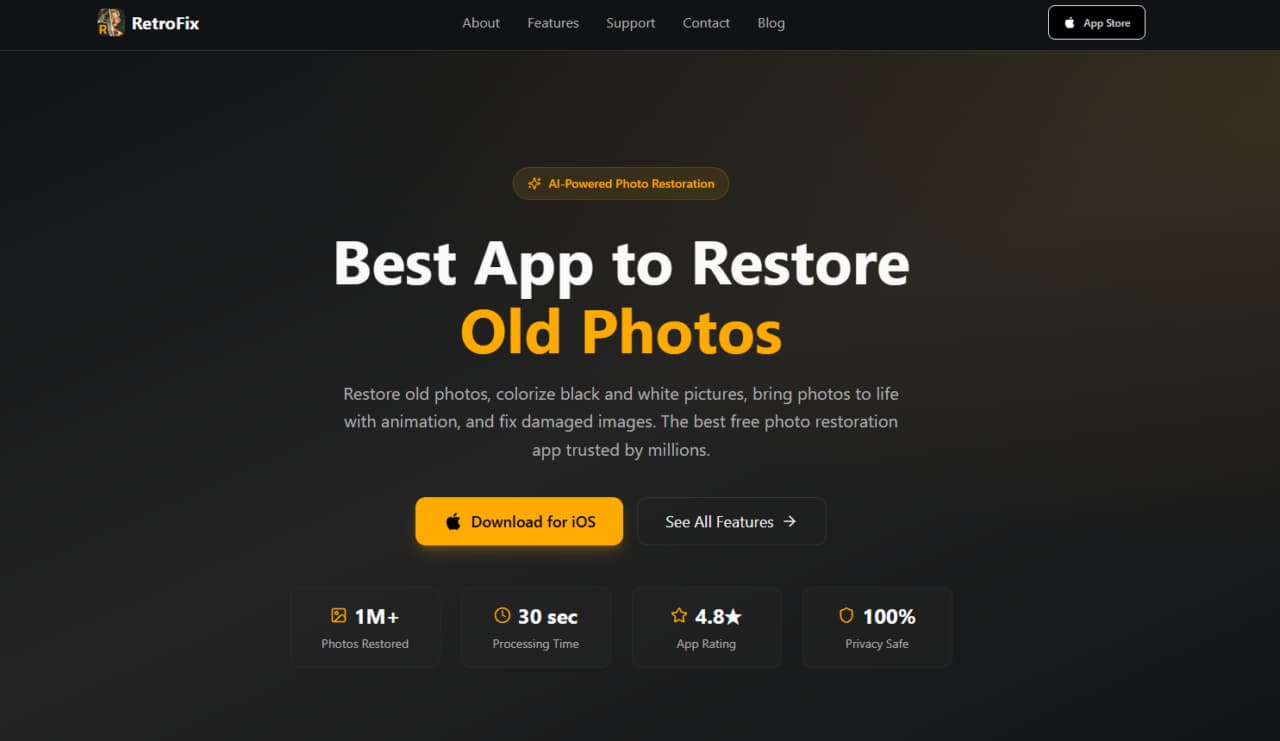
Alright, let’s shift gears. Not every photo is a disaster. Most are just… tired. Slightly faded, a bit dusty, missing their original pop. For this incredibly common scenario, RetroFix is your move. It’s built on a different philosophy: speed and simplicity over absolute power. If Renew is a surgical theater, RetroFix is a well-stocked first-aid kit. It’s for making a photo look markedly better, fast, without a manual.
When RetroFix Makes More Sense
Imagine you’ve scanned twenty old family vacation pics. They’re all a little washed out, maybe a slight green cast from age. You don’t need individual, deep analysis for each one. You need a consistent, reliable lift for the whole batch. That’s where RetroFix lives. The process is almost insultingly easy. Upload, let the AI do its single pass, download. Done. It’s ideal for:
- Quick restoration without extra steps;
- Colorizing old family photos;
- Fixing minor scratches and noise;
- Everyday use on mobile devices.
When your goal is a general refresh, not a forensic reconstruction, this simplicity is the whole product. Sometimes good enough is perfect.
Core Capabilities And Limitations
Its strength is its focus. The AI is optimized for the most frequent issues: general fading, minor physical flaws, and decent colorization. The output is reliable and looks good on a screen. But here’s the thing. It won’t perform miracles on a photo that’s 80% gone. It can’t reconstruct a missing eye. It will, however, make the remaining 20% look as good as possible. You can expect:
- Automated photo restoration tools;
- AI-based colorization and enhancement;
- User-friendly interface for non-technical users.
It knows its lane and stays in it. For the vast majority of “this looks old” photos, that’s plenty. For the true relics, you’ll feel its limits.
Fix My Pics
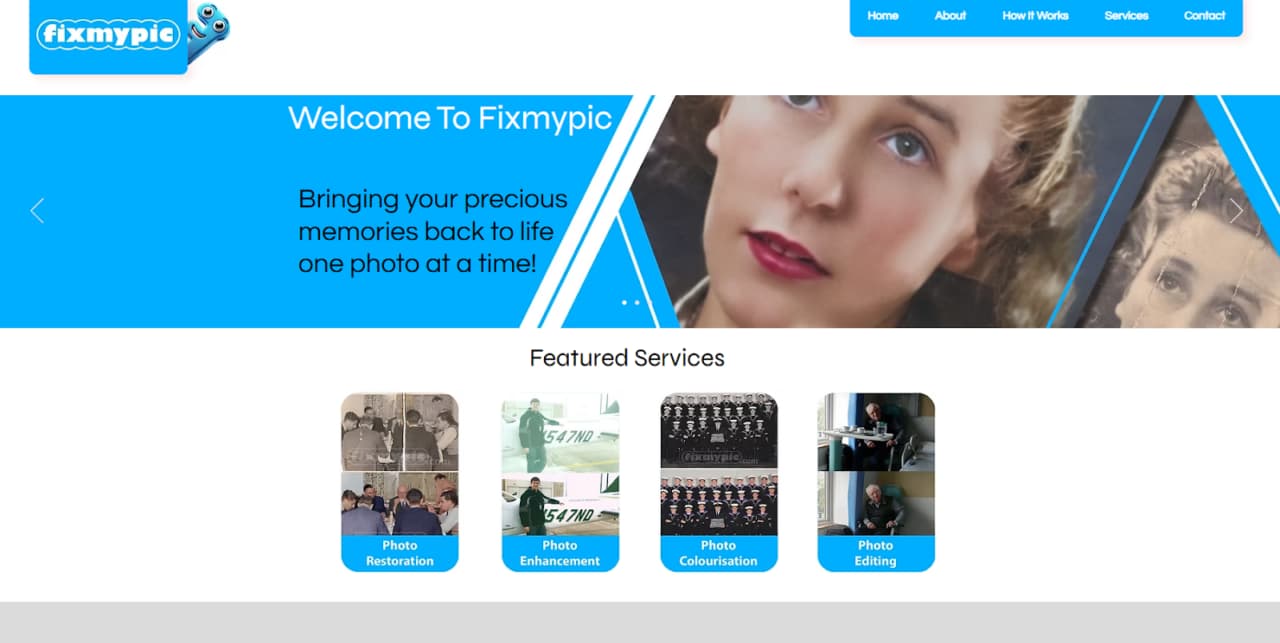
Now for the third spot. Fix My Pics is the utilitarian choice, the no-nonsense tool that gets the fundamental job done. It doesn’t market itself as the most powerful or the smartest. It positions itself as accessible and straightforward. This is the app you use because it’s right there, it’s simple, and it handles the obvious problems. The yellowing, the dust spots, the dull colors. Its restoration stripped back to the basics.
A Practical Alternative For Basic Restoration
Maybe you have a few photos from the 90s that have that weird red tint. Or some scanned Polaroids that lost their contrast. You don’t need a multi-stage AI analysis. You need a digital clean. Fix My Pics is built for this level of work. It applies a solid, general-purpose algorithm that attacks common age-related damage. It’s a specialist in the typical, not the exceptional. Its wheelhouse includes:
- Removing yellowing and visible aging marks;
- Basic enhancement of old photos;
- Simple black-and-white photo colorization.
It earns its place by covering the most common need competently, without asking anything from the user. It’s a fixer, not an artist.
What You Should Expect From This Tool
Temper your hopes. You won’t get hyper-detailed facial reconstruction or perfect historical color accuracy. What you will get is a cleaner, brighter, more viewable version of your original file. The process is nearly instant, which for many people is the killer feature. The learning curve is a flat line. The offering is bare-bones:
- Straightforward AI restoration workflow;
- Minimal learning curve;
- Suitable for casual photo fixing tasks.
That’s the whole pitch. It does a specific set of things decently well, with zero complication. According to our data, for a huge chunk of users, that’s exactly the right trade-off. It solves the problem they actually have.
Final Thoughts On Choosing An AI Photo Restoration Tool
So how do you pick? Start with the photo, not the tool. Hold it up, physically or mentally. Is it crumbling, torn, a real mess? Go with the heavy-duty option first. Is it just faded and sad? The quick-fix service will probably delight you. Is it basically fine, but needs a digital wipe-down? The basic utility makes sense.
The choice is a diagnostic exercise. Match the scale of the damage to the ambition of the tool. All three of these services are, frankly, miracles compared to what was available a decade ago. They put a conservation lab in your pocket. Your job is just to decide how much of that lab you really need. The rest is a few taps and a wait that feels like magic every single time.
Last modified: February 2, 2026