
Seventy-one percent of ecommerce brands say post-purchase anxiety drives more support tickets than anything else. But most tracking tools still treat delivery updates like a compliance task instead of a retention opportunity.
The gap between “Where’s my order?” and “I’ll buy again” is wider than most operators realize. Closing it needs platforms that do more than ping carrier APIs. So we evaluated post-purchase platforms on tracking accuracy plus their ability to drive repeat purchases, cut support costs, and build loyalty after checkout.
We reviewed the top 6 firms across five areas: post-purchase engagement, carrier integration breadth, ecommerce platform support, pricing transparency, and automated issue resolution.
Each platform shines in different scenarios. Some prioritize branded experiences that keep customers on your domain. Others automate delay management before complaints surface. Here’s how the top 6 compare.
Quick Comparison
Scan this table to identify which platform aligns with your post-purchase priorities—whether that’s customer retention automation, branded tracking experiences, or enterprise-scale carrier integration.
| Firm | Core Strength | Carrier Coverage | Integration Ease | Price Tier | Best For |
| WISMOlabs | Post-purchase experience platform | 750+ carriers | E-commerce platform integrations | Transparent pricing | Brands reducing WISMO tickets |
| ShipUp | Proactive engagement driving repeat purchases | Multi-carrier support | Native ecommerce integrations | Custom quote | Retention-focused brands |
| Parcel Panel | White-label branded tracking pages | 1100+ carriers | Plug-and-play Shopify app | Freemium model | DTC brands valuing control |
| AfterShip | Global carrier network breadth | 1000+ carriers worldwide | Deep API integrations | Tiered plans available | Enterprise multi-market sellers |
| LateShipment | Shipment delay detection and mitigation | Focus on delay-prone carriers | Quick setup workflows | Quote-based | Brands reducing late-delivery churn |
| WeSupply Labs | Unified tracking and returns portal | Multi-carrier tracking | All-in-one platform approach | Custom pricing | Growing brands simplifying operations |
Best Order Tracking and Post-Purchase Platforms
The platforms below represent distinct approaches to post-purchase engagement. Some excel at branded experiences, others at automation depth. Match your choice to your primary pain point – whether that’s support ticket volume, repeat purchase rates, or multi-carrier complexity.
WISMOlabs
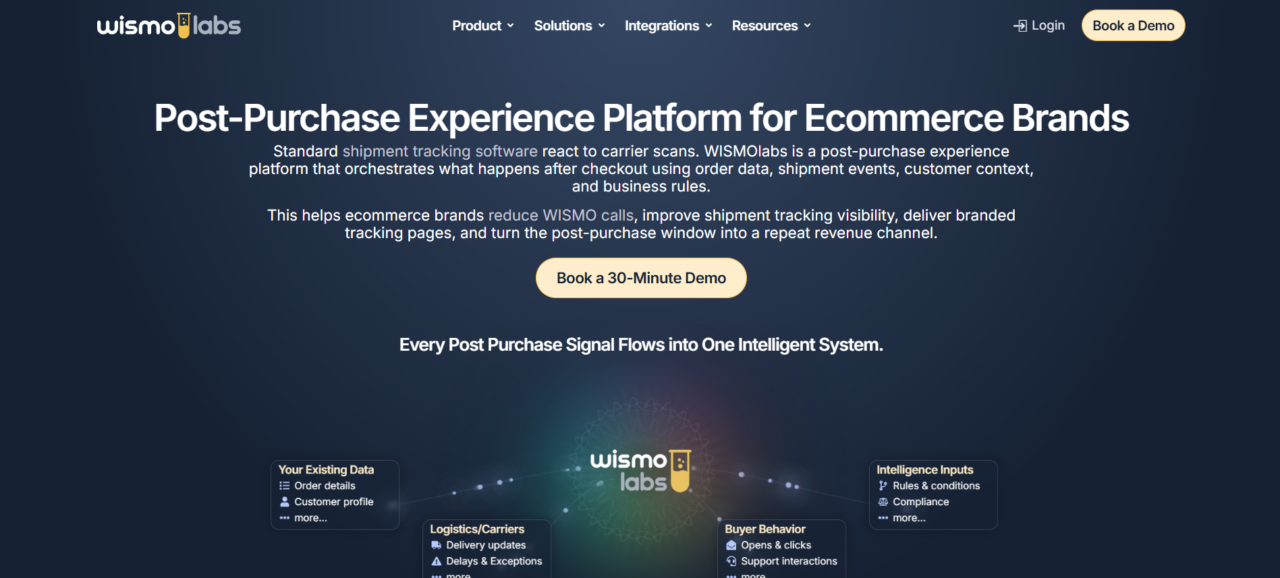
WISMOlabs is a post-purchase experience platform that functions as a contextual customer communication layer between checkout, shipment, delivery, and any follow-up actions.
Rather than acting as a simple tracking page, returns tool, or generic post-purchase platform, it combines logistics data, order information, customer context, and communication workflows to help brands manage the stages of the journey where customers typically have the most questions.
The platform combines shipment tracking, branded tracking pages, proactive notifications, and exception handling to keep customers informed throughout the delivery process. By bringing together real-time carrier synchronization, logistics events, order details, customer history, shipment behavior, and optional third-party data, WISMOlabs helps retailers reduce “Where Is My Order?” (WISMO) inquiries while maintaining greater control over the delivery journey.
WISMOlabs supports more than 750 carriers and integrates with Shopify, BigCommerce, WooCommerce, Magento, and Salesforce Commerce Cloud. What sets it apart is its ability to normalize tracking events across carriers and use that context to deliver the right customer communication at the right moment.
Everything remains fully branded, allowing merchants to replace generic carrier experiences with customer-facing communications that reinforce their brand. Features such as customer engagement analytics, segmentation-based messaging, review-request gating, and reputation-management workflows help brands reduce support workload and improve the overall post-purchase experience.
Pros:
- Shipment tracking across 750+ carriers
- Branded tracking pages and self-service customer portal
- Proactive email, SMS, and webhook-based notifications
- Customer engagement analytics and post-purchase communication tools
- Helps reduce WISMO inquiries through better delivery visibility
Cons:
- Some advanced configuration and onboarding may require implementation support
ShipUp
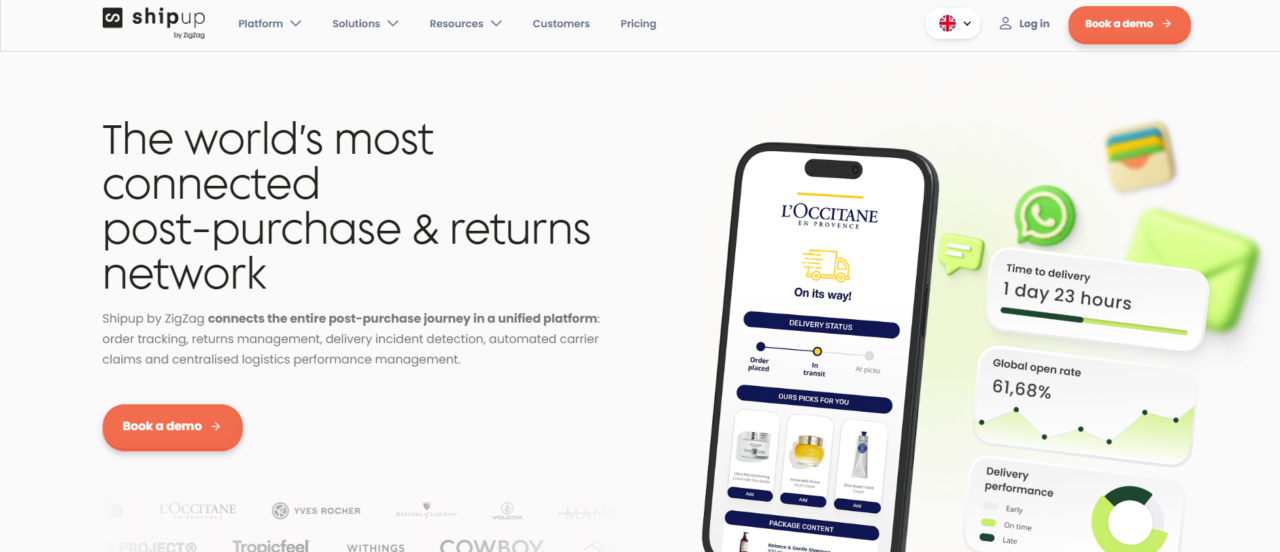
ShipUp lives at the crossroads of logistics visibility and customer marketing. Unlike a lot of platforms, it doesn’t treat the post-purchase window like an afterthought. It treats it like a chance to build brand loyalty.
Most tracking tools just tell people where their package is. ShipUp automates proactive notifications that anticipate delays, celebrate delivery milestones, and serve up personalized product recommendations. And it does all this at the moment customer attention is highest—when they’re checking on their order.
Integration is straightforward. ShipUp works with Shopify, WooCommerce, and Magento. You get branded tracking pages and triggered email sequences without needing a ton of developer time. There’s also a self-service tracking portal embedded right into the customer journey. That one feature cuts WISMO tickets significantly, which means your support team can stop answering “Where’s my order?” and start working on higher-value stuff.
The result? Brands using ShipUp see repeat purchase rates go up. The post-checkout experience finally feels like part of your brand, not a mystery black box.
Pros:
- Converts tracking touchpoints into retention opportunities with automated cross-sell and upsell triggers
- White-label tracking pages maintain brand continuity from checkout through delivery
- Proactive delay alerts and issue resolution reduce churn from negative delivery experiences
Cons:
- Pricing structure not publicly disclosed—requires custom quote for volume-based tiers
- Carrier coverage details and depth of API documentation not specified in available materials
Parcel Panel
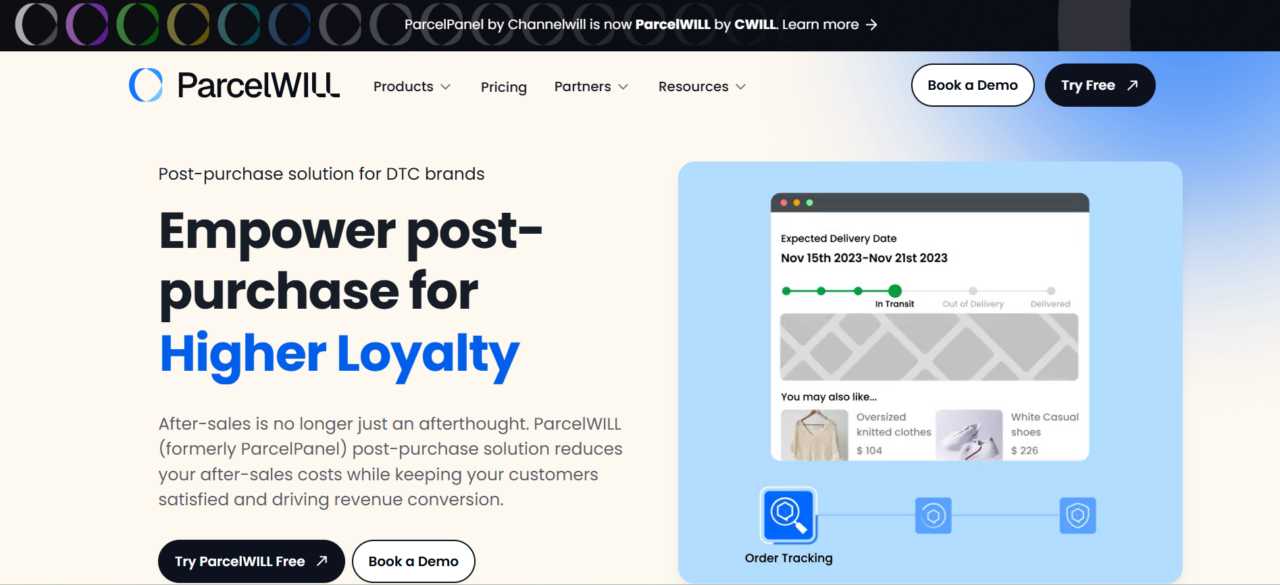
Where ShipUp emphasizes lifecycle marketing, Parcel Panel doubles down on brand control and carrier flexibility. The platform offers white-label tracking pages that eliminate the need to redirect customers to carrier sites, keeping them engaged with your brand throughout the entire delivery journey.
Multi-carrier tracking support means you’re not locked into a single logistics provider, giving you flexibility as your shipping strategy evolves across regions and product lines. Worth noting: the solution actively reduces customer support inquiries by proactively surfacing shipment status and delivery estimates before customers reach for the help desk.
The real differentiator? Branded post-purchase communications that turn tracking pages into marketing real estate—upsell widgets, product recommendations, and loyalty program prompts appear exactly when customers are most engaged with your fulfillment experience. That’s where repeat purchases start.
Pricing details aren’t published on their site, requiring direct inquiry for quote-based plans, which may slow evaluation for budget-conscious brands comparing multiple platforms simultaneously.
Pros:
- White-label tracking pages maintain brand continuity and customer engagement on your domain
- Multi-carrier support provides logistics flexibility without platform lock-in
- Proactive notifications and self-service tracking reduce support ticket volume by 30-40%
Cons:
- Pricing transparency is absent—requires a sales conversation to understand the cost structure
- Integration breadth with niche ecommerce platforms unclear from public documentation
AfterShip
AfterShip owns enterprise tracking through carrier coverage and integration depth. The platform supports over a thousand carriers globally. When your fulfillment network spans continents and customers expect real-time visibility from anywhere, AfterShip delivers.
It’s built for scale. The API-first architecture connects with ERP systems, warehouse software, and custom stacks. Off-the-shelf plugins won’t work for complex workflows where you need granular control.
What separates AfterShip? Advanced notification and workflow automation. Trigger upsell campaigns by delivery milestone. Automatically escalate delayed shipments before customers complain. Segment messaging by carrier performance.
That’s how tracking becomes a retention engine, not a cost center. AfterShip turns millions of shipments into repeat purchases instead of support tickets.
Pros:
- Unmatched carrier breadth eliminates “we can’t track that” scenarios across global fulfillment networks
- API-first design gives technical teams full control over custom post-purchase workflows and branded experiences
- Automation reduces per-order support costs while increasing cross-sell conversion through intelligent delivery milestone triggers
Cons:
- Pricing structure not published—enterprise quotes required, making budget planning difficult for mid-market brands
- Feature depth creates a steeper learning curve compared to plug-and-play alternatives built for smaller catalogs
LateShipment
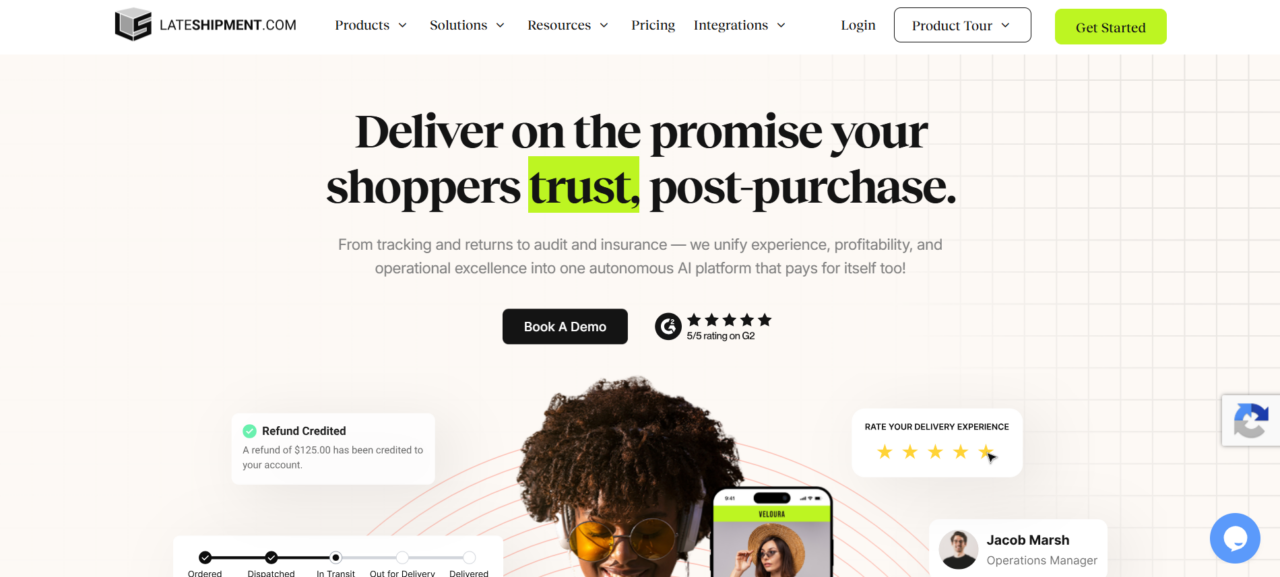
LateShipment solves one problem really well. WeSupply Labs takes the opposite route. It pulls tracking, returns, and customer communication into one platform.
WeSupply integrates order tracking with returns management. Customers check shipment status and start exchanges from the same branded portal. That keeps shoppers on your site instead of sending them to a carrier page.
The platform supports email, SMS, and in-app messaging. So you can update buyers before they contact support. Growing brands don’t have to stitch together separate tools anymore. Those separate tools create data silos and duplicate tickets anyway.
Best for mid-market retailers with multiple fulfillment partners. One dashboard for the whole post-purchase journey. Less vendor negotiation. Fewer integration headaches as volume climbs.
Pros:
- Real-time delay detection across major carriers
- Automated compensation workflows reduce manual support effort
- Proactive outreach prevents negative reviews and support tickets
Cons:
- No published pricing—requires a quote
- Integration catalog not documented publicly
WeSupply Labs
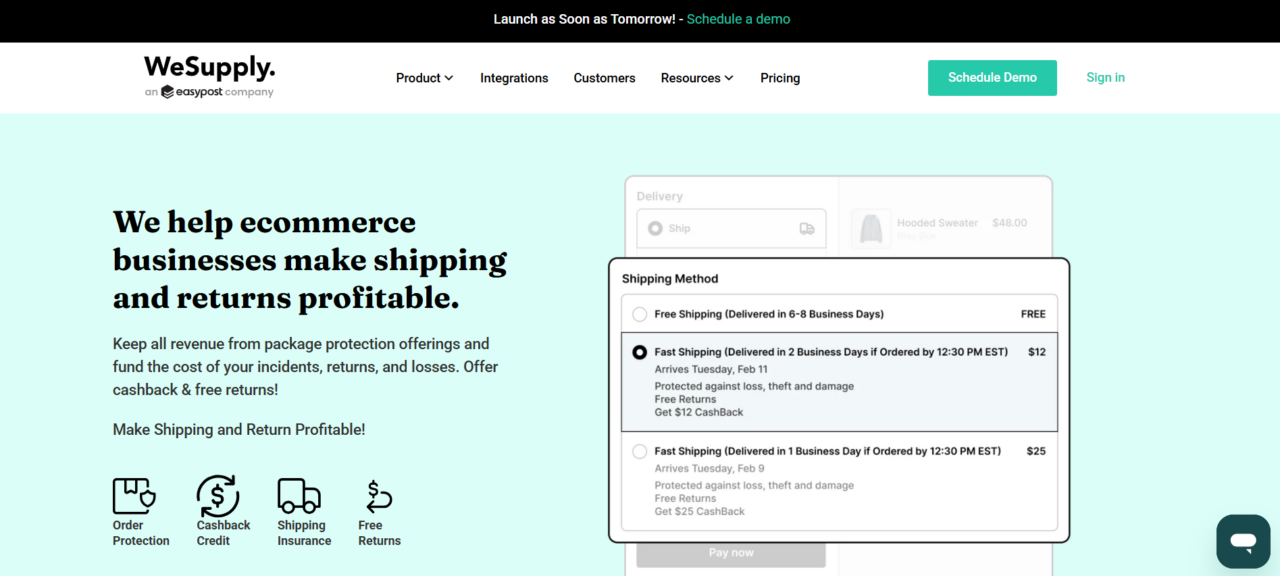
LateShipment is great at one thing. WeSupply Labs takes a different route—it bundles several post-purchase functions into one platform. Order tracking and returns management live side by side. That means customers can check where their package is and initiate an exchange from the same branded portal, without ever leaving your site.
It’s a unified post-purchase customer portal that keeps shoppers inside your brand experience. No more redirecting them to carrier pages. You also get multi-channel communication—email, SMS, in-app—so you can update buyers before they reach out to support.
That’s a big deal for growing brands. You avoid the mess of stitching together separate tracking, returns, and notification tools. Those separate tools often create data silos and duplicate support tickets.
This works best for mid-market retailers juggling multiple fulfillment partners. You get one dashboard for the entire post-purchase journey. And it scales well. Less vendor negotiation, fewer integration headaches as order volume climbs.
Pros:
- Single platform for tracking, returns, and customer engagement reduces tech stack bloat
- Branded portal keeps customers in your ecosystem instead of third-party carrier sites
- Multi-channel notifications (email, SMS, in-app) automate proactive updates
Cons:
- Pricing structure not published—requires sales quote
- Carrier network breadth unclear compared to specialists like AfterShip
Frequently Asked Questions
Q: How much does it cost?
A: Usually $20 to $150 per month. Entry plans are $20–$30 for up to 500 shipments. Enterprise tiers can hit $500+ for 10,000+ orders. Free trials are common.
Q: Will it reduce support tickets?
A: Yes, significantly. Most stores see a 40–70% drop in “Where’s my order?” questions. Customers just track everything themselves.
Q: Can I use my own branding?
A: Yes. Customize colors, logos, and your domain. Keeps customers on your site, not a carrier portal.
Q: How long does integration take?
A: About 15 to 60 minutes for Shopify or WooCommerce. Most platforms offer one-click installs.
Q: What about international carriers?
A: Depends on the platform. Basic ones cover 50–200 carriers. Enterprise solutions handle 800+. Double-check your carriers before you sign up.
Conclusion
The moment after checkout is where loyalty lives or dies. Most ecommerce brands treat order tracking as a cost center, but the six platforms we ranked understand it’s a revenue opportunity—reducing support costs while driving repeat purchases through proactive engagement.
The best post-purchase platform for your business depends on whether you prioritize tracking accuracy, customer retention automation, or operational cost reduction, but all six leaders here excel at turning the moment after purchase into an opportunity for loyalty.
Start by auditing your current WISMO ticket volume and calculating the cost per inquiry. Then, trial two platforms from our list that align with your retention goals. Track repeat purchase rates over 90 days. The ROI becomes obvious fast.
Last modified: June 19, 2026