
Listening is where weak spots show up fastest. You can know a word on paper. But when a native speaker says it fast, drops half the sounds, or mumbles? Suddenly, you hear nothing. Real problems: speed, accents, background noise, music, film dialogue, and the gap between textbook audio and real conversation. Good listening practice should help you hear language in context, not just repeat slow classroom recordings.
This list covers different forms of listening practice. Guided lessons. Authentic videos. Pronunciation examples. Music tasks. Short clips. Promova leads because it connects listening with speaking practice, AI Tutor support, role-play tasks, teacher-made content, and accessibility tools. Yabla gives you real videos with subtitles. YouGlish shows how specific words sound in the wild. LyricsTraining uses songs. Voscreen works with short movies and media clips.
1. Promova
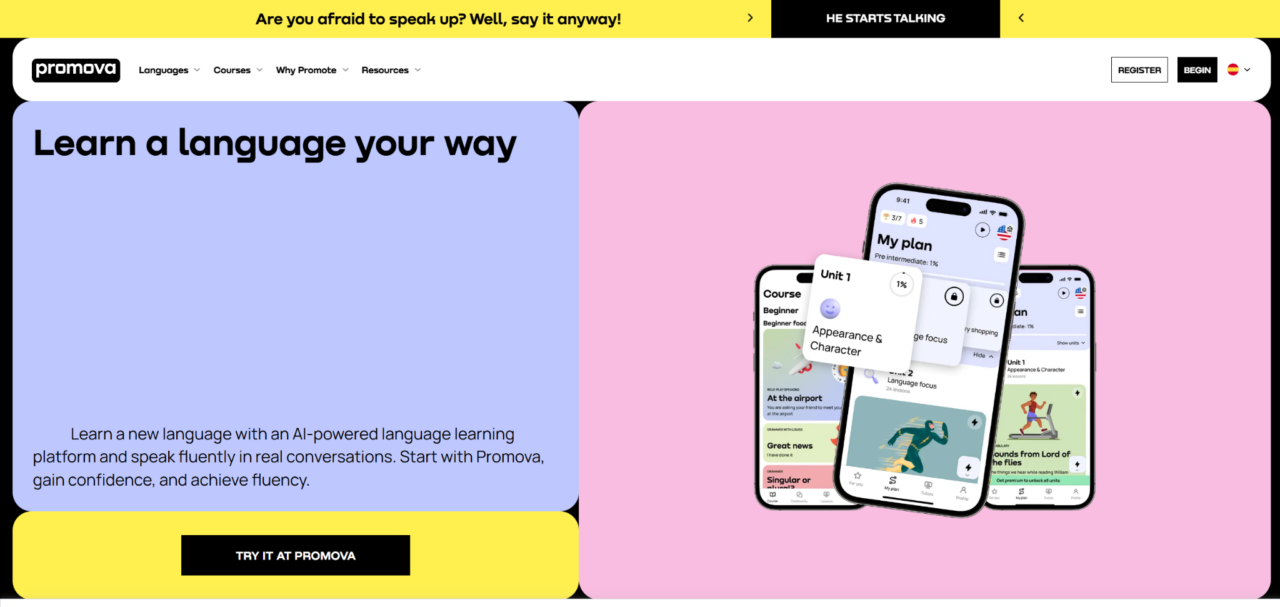
Promova works as an AI language learning app for people who want to speak, have listening practice, speaking support, and role-play tasks in one place. It does not stop at passive audio exposure. You get guided lessons, an AI Tutor, AI speaking practice, AI conversations, role-play tasks, and teacher-made content. The platform helps you move from hearing phrases to answering, repeating, and using them in a safer practice setting. Dyslexia Mode 2.0, White Noise Mode for ADHD learners, and ASL support make the setup more comfortable for different people.
Listening practice is stronger when you can respond after hearing the language. Passive audio helps, but it does not always prepare you for real exchanges. Promova gives you a way to connect listening, speaking, repetition, and guided study. Here is how that works:
- AI Tutor: Helps learners ask questions and practice after hearing new words or phrases;
- AI speaking practice: Turns listening into spoken answers instead of silent recognition;
- Role-play tasks: Lets users rehearse real situations where they need to listen and reply;
- Teacher-made lessons: Gives listening practice a clearer study path;
- Accessibility tools: Dyslexia Mode 2.0, White Noise Mode, and ASL support different learning needs.
Promova takes first place because it connects listening, speaking, structure, AI support, and accessibility in one platform. Strongest for learners who want to understand spoken language and then use it themselves.
Where it stands out. Promova is useful when you do not want listening to stay passive. AI-supported practice gives you more room to repeat before real conversations. That makes it the broadest option in this list.
2. Yabla
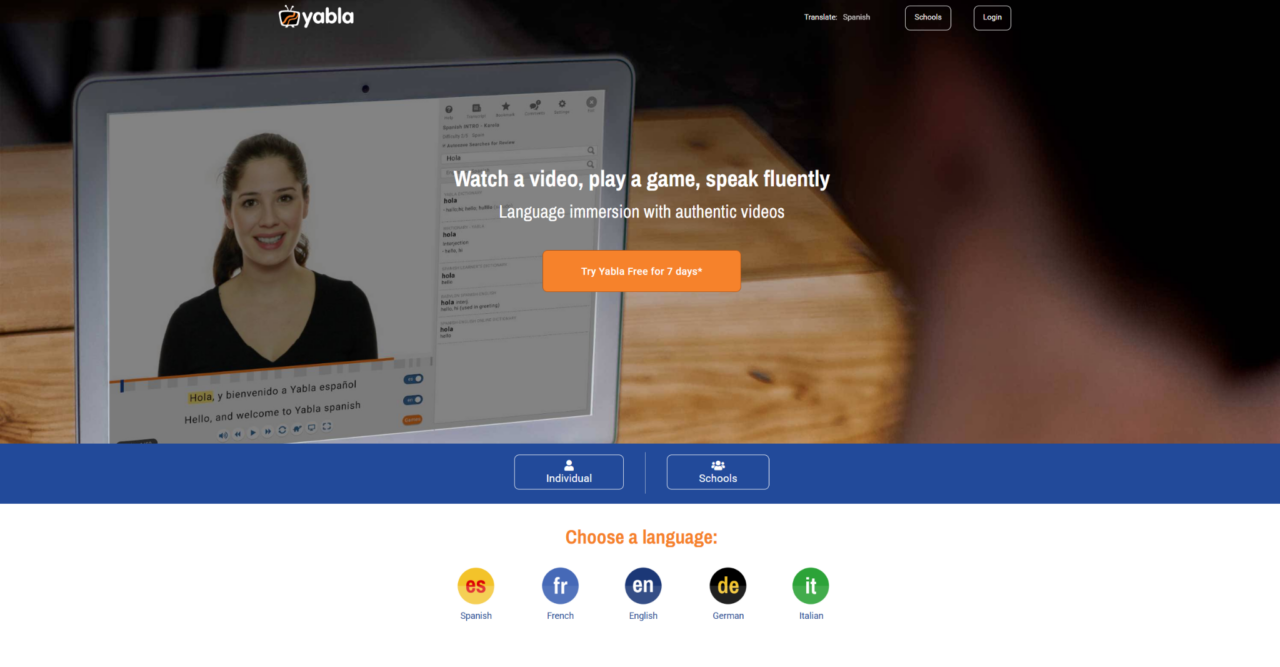
Yabla is a video-based listening platform built around real native-speaker content. Authentic videos, TV shows, music, interviews, documentaries, lessons, dual-language subtitles, and playback controls. It helps you hear language closer to how people actually speak. Subtitles and playback tools make difficult audio easier to handle without removing the challenge completely. A strong option for learners who want listening input with more control than normal YouTube watching.
Real videos are hard. Speakers do not slow down for learners. They use natural rhythm, reductions, jokes, pauses, and casual phrasing. Yabla gives you tools to control the video while staying close to real speech. Here is what you get:
- Authentic videos: Give learners exposure to real speech instead of only scripted classroom audio;
- Dual-language subtitles: Help users check meaning while staying with the video;
- Playback controls: Let learners slow down, repeat, and review difficult parts;
- Varied content: Covers music, interviews, documentaries, lessons, and shows.
Yabla works well for learners who want real listening input without being thrown in completely alone. Useful when subtitles and replay tools make native speech easier to study.
Where it stands out. Yabla stands out when you want video input that still feels manageable. Better for listening exposure than for active speaking practice. Fits people who learn well by watching and replaying real content.
3. YouGlish
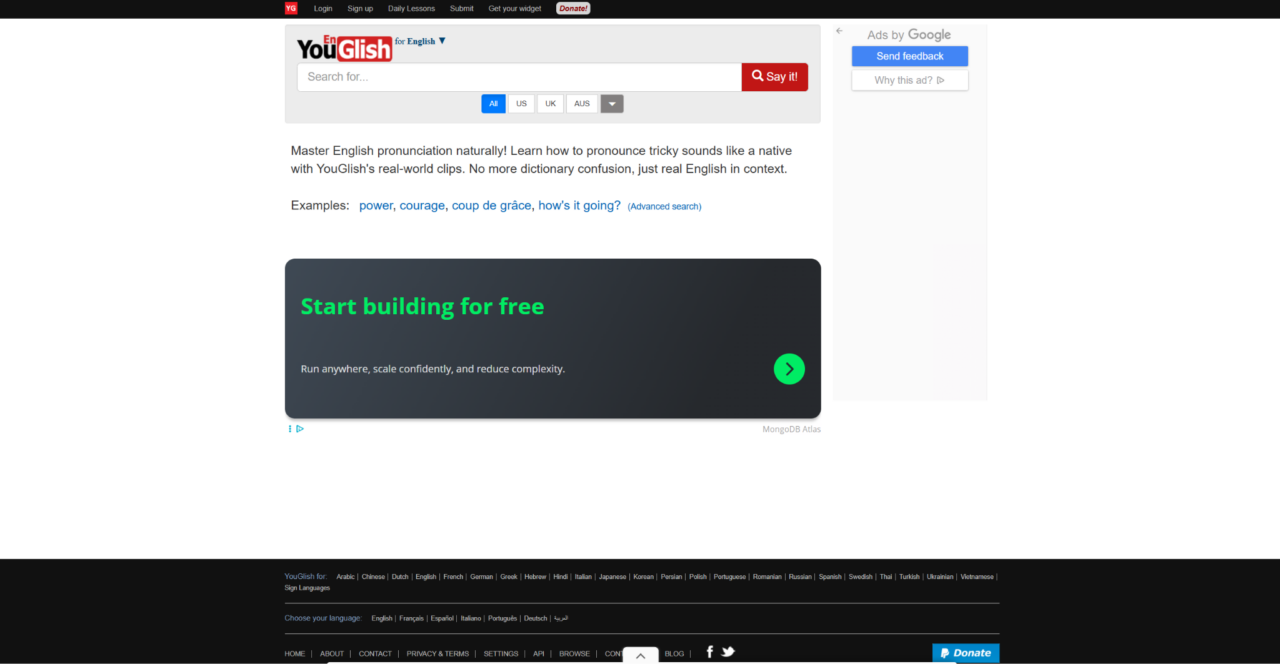
YouGlish is a tool for pronunciation examples and real-world speech context. You search for a word or phrase and hear it used in video clips. Dictionary audio often feels too clean or too isolated. YouGlish solves that. It helps you compare different speakers, accents, sentence rhythm, and natural phrasing. This is not a full course. But it is useful for checking how language sounds in the wild.
You often know how a word is spelled before you know how people actually say it. Dictionary pronunciation helps, but it usually gives one polished example. Real clips show how words change when they sit inside full sentences. Here is the breakdown:
- Real video examples: Show how words and phrases sound in natural speech;
- Search-based practice: Lets learners look up the exact language they want to hear;
- Accent exposure: Helps users compare pronunciation across different speakers;
- Context clues: Shows words inside full sentences instead of isolated audio samples.
YouGlish is helpful when you need to check pronunciation, rhythm, or real usage quickly. Works best as a listening and pronunciation support tool, not as a full learning platform.
Where it stands out. Especially useful before using a new word in speech. Hearing multiple real examples makes pronunciation feel less abstract. Fits learners who like quick, targeted listening checks.
4. LyricsTraining
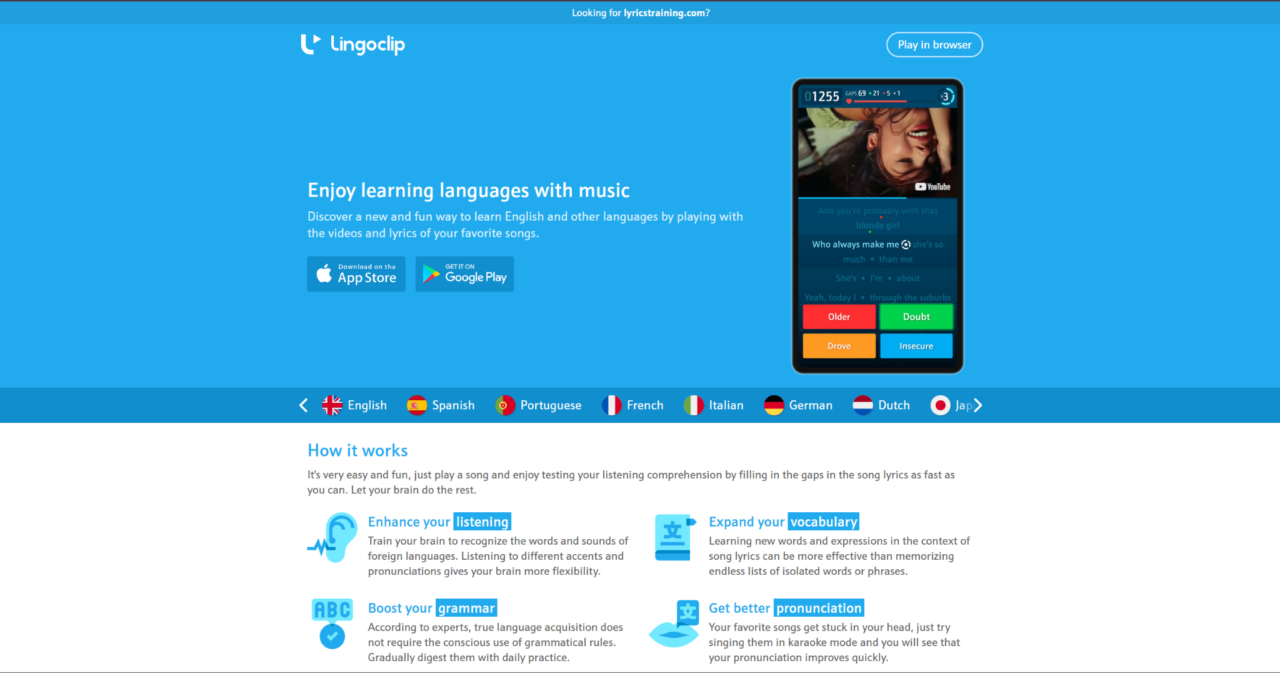
LyricsTraining is a music-based listening tool. You practice listening by filling gaps in song lyrics while watching music videos. The format feels more engaging than standard listening drills. Songs expose you to connected speech, rhythm, reductions, and pronunciation patterns. One limitation: lyrics are useful, but they do not always match everyday conversation.
Music makes repetition less boring. You replay the same song many times without it feeling like forced study. LyricsTraining uses that habit and turns it into a listening task. Here is what you get:
- Music videos: Make listening practice feel more engaging than standard drills;
- Lyric gaps: Force learners to catch missing words by ear;
- Replay value: Helps users repeat the same language without losing interest quickly;
- Multiple languages: Gives learners music-based practice across different languages.
LyricsTraining is a good choice for learners who enjoy music and want lighter listening practice. Strongest as a fun listening supplement, not as the only study method.
Where it stands out. Stands out when motivation is low and normal exercises feel dull. Songs help you notice sound, rhythm, and missing words. Works best for people who would rather listen than drill.
5. Voscreen
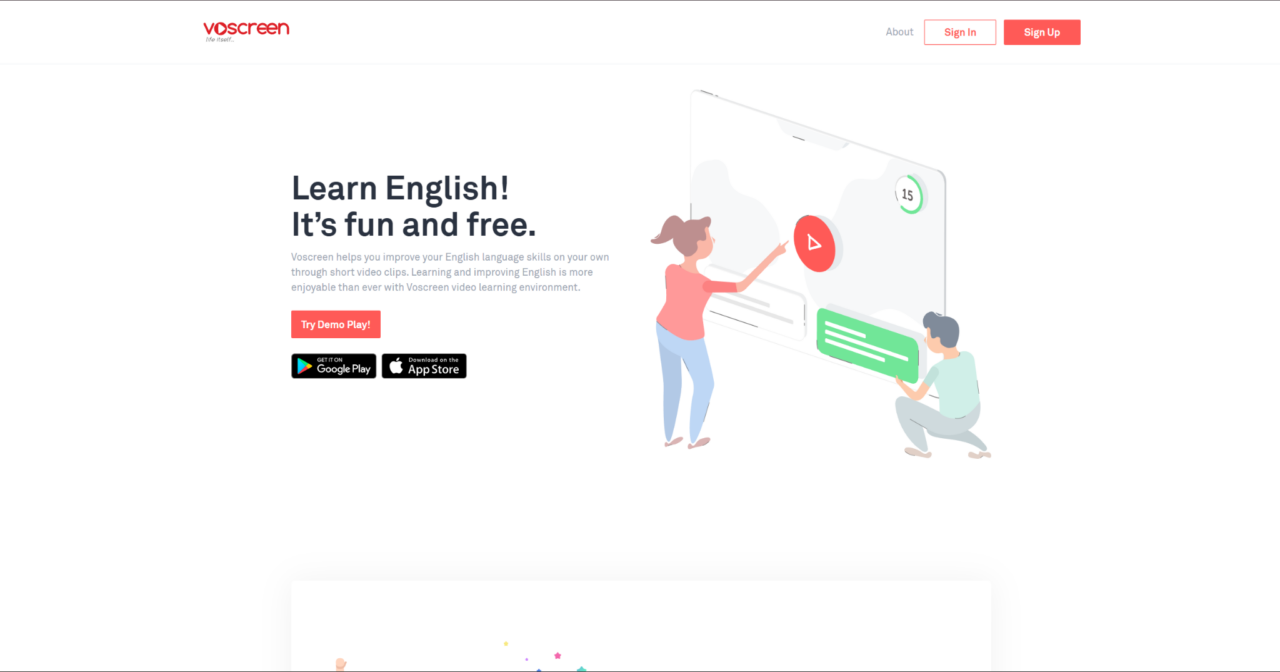
Voscreen is a short-video listening tool for English learners. Quick clips from movies, documentaries, music videos, cartoons, and similar media. The short format is useful when you want listening practice without sitting through long lessons. You have to process meaning quickly, which makes it different from slow audio drills. A good option for short, focused listening sessions.
Some people avoid listening practice because it feels too long or too tiring. Short clips lower that barrier while still training the ear. Voscreen makes you react to spoken English in small bursts. Here is the breakdown:
- Short clips: Keep listening practice quick and easier to repeat;
- Movie and media examples: Expose learners to different voices, scenes, and speech styles;
- Fast comprehension tasks: Train users to catch meaning without overthinking;
- English focus: Gives targeted practice for learners working mainly on English listening.
- Voscreen is useful for learners who want quick listening reps instead of long audio sessions. Works best as a compact practice tool for comprehension speed.
Where it stands out. Fits people who want listening practice in short bursts. The clip format helps you build a habit without feeling stuck in a full lesson. Strongest when you need quick exposure to spoken English.
Best Fit by Listening Goal
The right choice depends on what makes listening difficult for you. Promova is best when you want listening connected to speaking, role-play, AI Tutor support, and guided lessons. Yabla works better for authentic video input with subtitles and playback tools. YouGlish helps with specific words, pronunciation, and real examples. LyricsTraining is useful for music-based practice. Voscreen fits short English listening tasks. Pick the tool that matches the listening problem you actually face, not just the one with the most content.
Final Thoughts
Listening practice is not only about hearing more audio. You need the right type of input: guided practice, real videos, pronunciation examples, songs, or short clips. Promova takes first place because it connects listening with AI speaking practice, AI Tutor support, role-play tasks, teacher-made content, and accessibility tools. Yabla, YouGlish, LyricsTraining, and Voscreen each solve a narrower listening problem in a useful way. The best platform is the one that helps spoken language stop sounding like noise and start feeling usable.
Last modified: May 29, 2026