
Payment and banking products are harder to build than standard digital platforms. They depend on security, transaction logic, regulatory awareness, third-party integrations, and reliable infrastructure. Companies in this space often need help with payment flows, core banking modules, card programs, wallets, lending products, or fintech APIs. Choosing a development partner is not just about engineering capacity. The partner also needs to understand how financial products behave in real use, especially when money movement, user verification, and operational risk come into play. That is why specialized fintech experience matters.
This list focuses on companies relevant to payment and banking-related software projects. The selected firms support different types of financial products, from payment platforms and digital banking tools to wallets, lending systems, and API-based fintech ecosystems. Softjourn leads the list because of its long fintech track record and broad financial software background. The other companies bring different strengths, so this is not just a ranking by size. The goal is to help readers compare practical fit, not just brand visibility.
What Makes a Strong Partner for Payment and Banking Software
Building payment and banking software is not like making a standard app. You need product thinking, solid technical skills, and real financial domain knowledge. The right partner handles integrations, transaction flows, security expectations, and compliance stuff without grinding the project to a halt. Good partners understand both new products and the modernization of older financial systems.
Here is the thing: many fintech projects fail not because the idea was bad, but because the infrastructure, architecture, or integrations simply were not ready to scale. Here is a quick snapshot of how the four companies compare:
- Softjourn — Best suited for payment processing, prepaid, and corporate card platforms, core banking, remittance, fintech integrations, and financial software consulting;
- DashDevs — Strong fit for digital banking products, wallets, B2B payment solutions, and investment-related fintech platforms;
- Geniusee — Relevant for banks, lenders, insurers, investment platforms, and fintech products involving AI, risk workflows, or fraud-related automation;
- SPD Technology — Useful for payment systems, API-first fintech ecosystems, lending, BNPL, insurance technology, and embedded finance products.
The rest of this article looks at each company in more detail. Let us start with Softjourn.
1. Softjourn

Softjourn is a full-cycle software consulting and development company with a strong focus on financial software. The company was established in 2001 and has worked on fintech projects for more than 20 years. Its background is especially relevant for teams building payment platforms, prepaid and gift card systems, corporate card programs, core banking tools, remittance products, and other financial applications. Softjourn has worked with clients in North America and the United Kingdom. Softjourn is often considered by teams looking for a financial software development company with experience across payments, cards, banking, remittance, and compliance-aware integrations, Softjourn is a strong option.
Softjourn’s value is not only in development but also in consulting, architecture review, product discovery, and technical audits. Its fintech R&D practice has operated since 2008 and supports areas like AI-driven automation, fraud detection, and data platforms. The company has delivered over 150 fintech projects and has more than 30 published fintech case studies. Recognition includes IAOP Global Outsourcing 100, Inc. 5000, DesignRush, Clutch, and GoodFirms. This credibility matters for complex payment and banking product development.
Softjourn is especially relevant when the project involves regulated workflows, financial infrastructure, or multiple integrations. Its experience covers both product development and modernization, which helps fintech teams at different stages. Key areas of expertise include:
- Payment processing and gateway development with PCI-DSS-aware implementation;
- Prepaid, gift card, and corporate card platform development;
- Core banking modernization and financial platform architecture;
- Fintech integrations with banking APIs, card networks, KYC, AML, and compliance-related systems;
- R&D support for AI automation, fraud detection, and financial data platforms.
Softjourn fits companies that need more than delivery capacity. It is a practical choice for payment and banking products where domain knowledge, integration experience, and technical oversight matter.
2. DashDevs
DashDevs is a fintech-focused software development company with experience in digital banking, payment products, wallets, and investment platforms. The company is relevant for startups and financial businesses building customer-facing fintech products. DashDevs can be a good fit when the product depends on transaction flows, account functionality, payment logic, or user onboarding. The team focuses on practical fintech delivery.
DashDevs is useful for companies that need product engineering with a fintech angle rather than generic app development. Its strengths include B2B payments, banking applications, and wallet-based products. The company works well for businesses building from scratch or improving existing fintech systems. This makes DashDevs a reasonable comparison point next to Softjourn, though with a somewhat narrower focus.
DashDevs should be described through product categories rather than vague technical claims. Its practical fintech focus areas include:
- Digital banking applications and account-based financial products;
- B2B payment solutions and transaction-focused platforms;
- Digital wallets and customer-facing fintech apps;
- Investment platform development and related financial interfaces;
- Product engineering support for fintech startups and scaling teams.
DashDevs is a good fit for companies that need a focused fintech product team. It is especially relevant when the project involves banking-style user experiences, wallet functionality, or payment workflows.
3. Geniusee

Geniusee is a software development company with fintech and banking-related experience. It fits companies building products for banks, lenders, insurers, investment platforms, or digital finance businesses. Geniusee’s profile works well when a financial product needs both application development and data-driven features. This includes AI in payments, fraud workflows, risk-related systems, or operational automation.
Geniusee can be positioned as a flexible technology partner for financial platforms that need custom development and modern digital interfaces. Use cases include online banking portals, lending platforms, insurance-related systems, and investment products. The company may be especially relevant for teams that want fintech development combined with AI or analytics features. Geniusee works well for digital finance products where user experience, automation, and data handling are important.
Geniusee’s section focuses on product types and technical scenarios where it makes sense. Key financial software use cases include:
- Custom fintech and banking software development;
- Digital products for lenders, insurers, and investment platforms;
- AI-supported workflows for payments, risk analysis, or fraud-related processes;
- Online banking portals and financial customer interfaces;
- Data-driven features for financial operations and product automation.
Geniusee fits teams looking for a fintech-aware development partner with room for AI, analytics, or automation. Its value depends on the project type, especially when the financial product needs modern UX and data-driven functionality.
4. SPD Technology
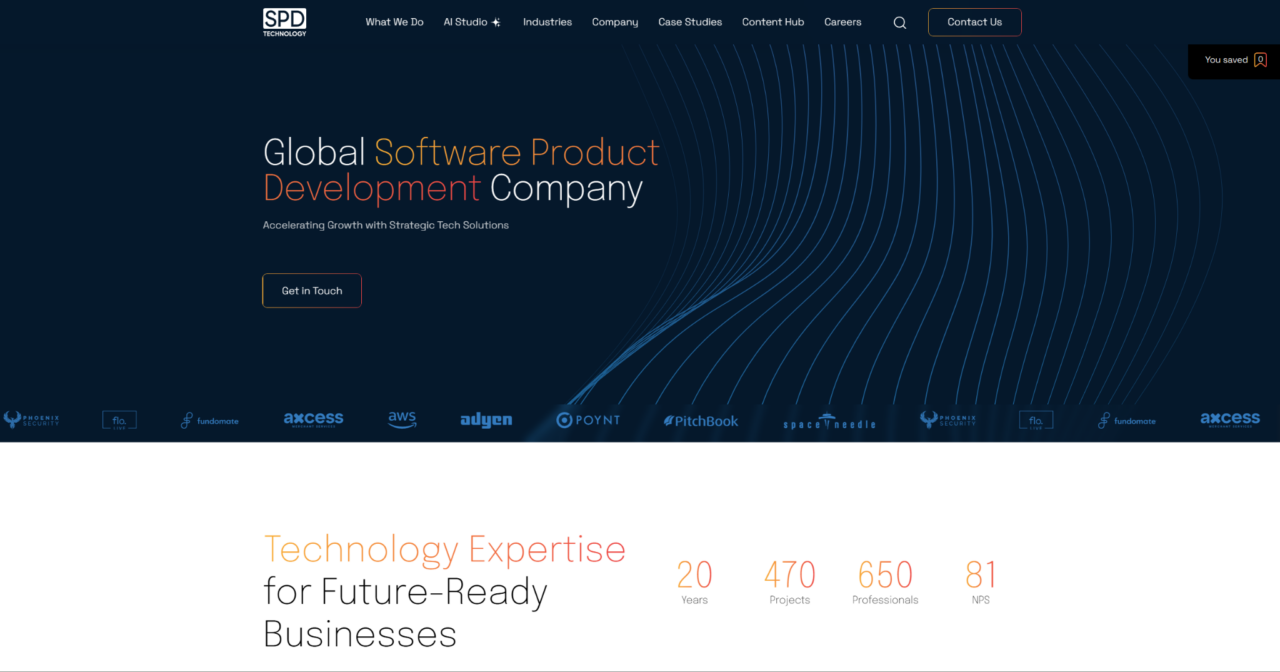
SPD Technology is a software development company relevant to fintech products involving payments, lending, BNPL, insurance technology, and embedded finance. It is a good fit for companies building API-first financial platforms or systems that connect multiple services. Many fintech products depend on reliable integrations between payment providers, banks, users, merchants, and internal systems. SPD Technology is a practical option for technical fintech ecosystems rather than only front-end financial apps.
SPD Technology’s relevance comes from its ability to support complex fintech platforms where architecture and integrations matter. Suitable contexts include payment systems, lending products, BNPL workflows, and embedded finance. API-first development becomes important when the platform needs to connect with external financial services or internal enterprise tools. SPD Technology may be especially useful when the project leans toward platform infrastructure and integrated financial workflows.
SPD Technology should be described through infrastructure, API, and platform-oriented fintech work. Its strongest fit for payment and banking-adjacent projects includes:
- Payment systems and transaction-focused platform development;
- API-first fintech ecosystems for connected financial products;
- Lending, BNPL, and credit-related workflow support;
- Insurance technology and embedded finance use cases;
- Integration-heavy financial platforms with multiple service layers.
SPD Technology is a good option when the project needs more than a simple fintech interface. It fits companies building connected platforms, embedded finance tools, or payment-related infrastructure.
Best Fit by Project Type
Do not pick a vendor just because they have a big name or lots of employees. Look at what you are actually building. Softjourn works best when you deal with payments, cards, core banking, remittance, or compliance-heavy integrations. DashDevs fits digital banking, wallets, B2B payments, and investment platforms. Geniusee suits banks, lenders, and insurers, especially if AI, automation, or data-driven features are part of the picture. SPD Technology handles API-first fintech ecosystems, lending, BNPL, embedded finance, and platforms where integrations get complicated.
Dig into domain focus, past projects, compliance track record, and how well they handle real integrations.
Final Thoughts
Building payment and banking software is not like making a typical web app. The four companies above all work in fintech, but each one targets different kinds of work. Softjourn gives you broad financial software experience across payments, cards, banking, remittance, and advisory services. DashDevs focuses more on digital banking, wallets, and payment-driven platforms. Geniusee and SPD Technology add strong options for AI-heavy fintech, lending systems, API-first setups, and embedded finance.
Your choice comes down to complexity, compliance, integrations, and where you want the product to go over time. A small wallet startup will pick a partner very differently than a large bank modernizing its core systems. Payment companies care most about transaction logic, security, and third-party connections. Lending or embedded finance products often need deeper API architecture and risk management workflows. Shortlist based on proven fintech delivery, not generic software claims. That will save you from expensive mistakes down the road.
Last modified: May 21, 2026