
Your product is code, graphics, and algorithms. You sell to casinos, not players. Yet, to close deals with serious operators, you need your own gambling license.
A B2B license.
It’s a credential, a compliance stamp, and a contract requirement. Operators won’t integrate an unlicensed game or platform; it puts their own license at risk.
Your licensing partner needs to understand this secondary layer. They’re not just helping you get a permit; they’re helping you build a commercially viable product within the rules that govern your clients.
Five Firms That Speak B2B
The right advisor gets the commercial pressure. They know your license application must satisfy a regulator and your sales department. These five work in that space.
1. Gofaizen & Sherle
Gofaizen & Sherle is a legal consulting firm for the gambling business that acts as a strategic partner for B2B software companies. This iGaming license service provider handles the complete process of securing B2B gambling licenses, from initial jurisdiction analysis to final regulatory approval for both new startups and established international groups.
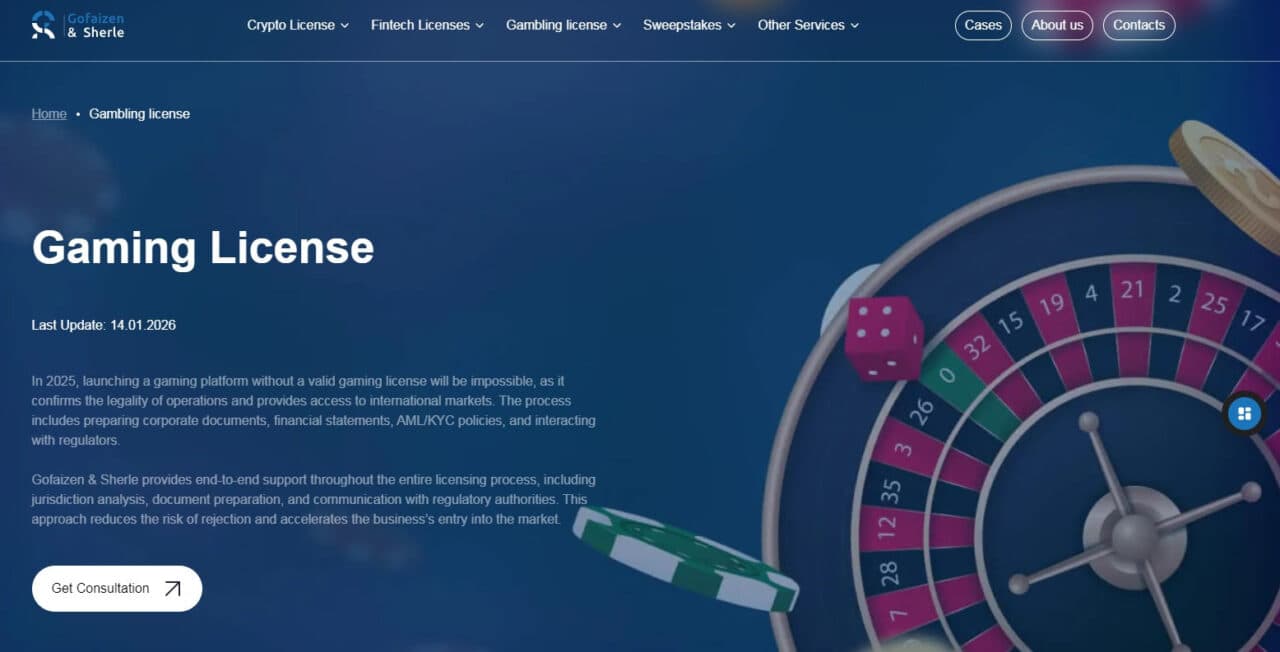
- Core B2B Service: As a dedicated law firm in gambling licensing, their core service covers guiding clients through how to get a gambling license, including securing the required operational permits for game studios, platform providers, and technology suppliers.They design compliant corporate and license structures that support commercial growth.
- Key Jurisdictions: 50+ jurisdictions globally, enabling strategic licensing planning for multi-market operations.
- What They Handle: Their team of gambling licensing consultants and iGaming lawyers ensures all licensed components of a technology stack fit together within regulatory frameworks. They manage the entire application process and act as a central hub for multi-jurisdictional compliance.
- Cost Insight: Custom strategic project pricing. It is important to note that these legal consulting services for iGaming focus exclusively on regulatory and corporate structure. This gambling license provider does not develop gaming websites, software, or handle payment processing.
2. A2CO
Based in Malta, A2CO works directly in the primary market for B2B software. The Malta Gaming Authority (MGA) has a clear framework for B2B Critical Supply licenses.
- Core B2B Service: Navigating the MGA’s B2B Critical Supply licensing process. This is essential for any provider selling to MGA-licensed operators.
- Key Jurisdiction: Malta (MGA).
- What They Handle: Preparing the technical compliance documentation, demonstrating game fairness (RNG certification pathways), and ensuring platform stability requirements are met for MGA approval.
- Cost Insight: As a Maltese law firm, they typically work on a project fee basis for a license application. Expect European legal market rates, focused on a defined outcome.
3. KIVON
KIVON’s advertised service is iGaming compliance and licensing. Their work centers on the day-to-day operational standards that software products have to meet.
- Main B2B Service: They link the initial license with continued technical adherence. This matters for companies with live dealer software, random number generator games, or platforms needing constant certification.
- Jurisdiction Scope: They probably work in primary markets such as the UK, Malta, and Curacao. These jurisdictions all have formal B2B licensing or approval systems.
- Their Role: They assist software firms in setting up the internal control systems and reporting procedures required to keep a license valid through software updates and new game launches
- Cost Insight: Likely offers consultancy packages combining initial licensing support with ongoing compliance retainer options.
4. GFLO Consultancy
GFLO Consultancy works as an advisory firm. They fit the strategic planning stage before a software company picks a licensing route.
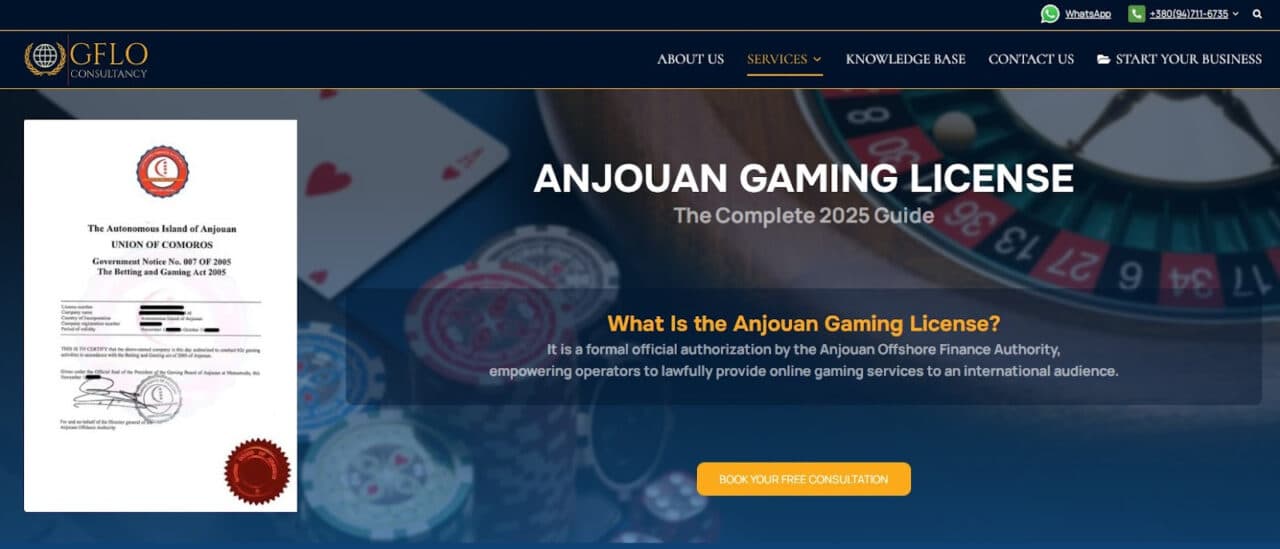
- Primary B2B Service: They provide guidance on licensing strategy and market entry. A game studio might use them to weigh a Malta B2B license against a Curacao distribution model.
- Jurisdiction Scope: Their advisory work spans different regions, depending on where a client’s operator customers are located.
- Their Role: They examine which licenses open more doors for sales, compare the costs and benefits of various jurisdictions, and align the application schedule with product release cycles.
- Fee Structure: They charge project-based fees for strategic consulting. This is distinct from the later legal fees for the actual license application.
5. Taxus
Taxus offers legal services alongside licensing. For a B2B provider, the legal contracts are as important as the license.
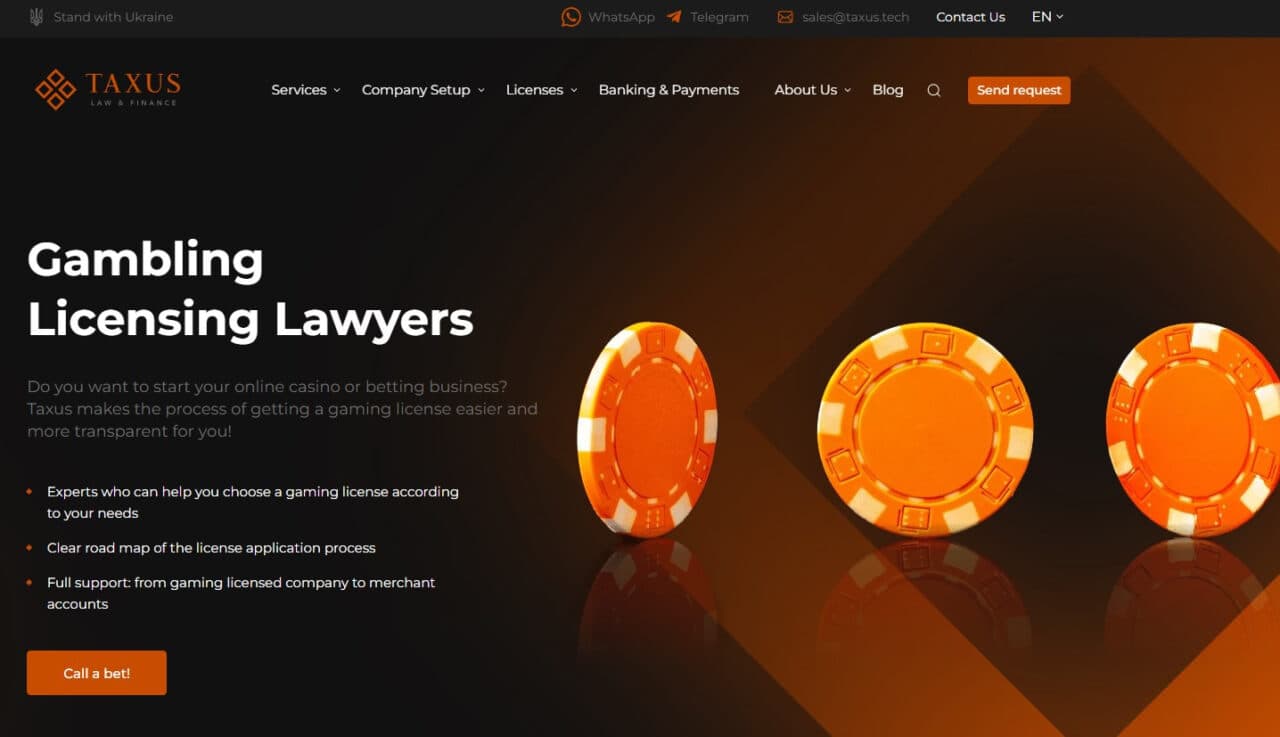
- Core B2B Service: Combining license acquisition with the drafting of commercial agreements. This covers the vital contracts between software provider and operator.
- Jurisdiction Scope: They work in several regions, concentrating on the legal framework of commercial contracts.
- Their Role: They obtain the required B2B license. Following that, they write or examine the core service contracts, game distribution agreements, and intellectual property terms that define commercial partnerships.
- Fee Structure: They might provide combined service packages. This could be a set price for the license work, plus separate fees for contract preparation, maintaining consistent legal support.
The B2B Licensing Checklist: What Your Process Needs
Getting a license for your casino platform or game studio isn’t the same as applying to run a casino. The regulator looks at different things. Your chosen provider should know this and build their process around a few key areas.
- Client Due Diligence for Your Clients: This is a big one. You’ll need to show the regulator your own system for checking the operators you work with. Your provider should help you build this. They’ll need to explain how you check an operator’s license, their financial health, and their own compliance history. If your client gets into trouble, it can reflect on your license.
- Technical Paperwork: Forget business plans about player acquisition. The focus shifts to your technology. Your provider must gather and present your RNG certification from a lab like iTech Labs or GLI. They’ll handle source code escrow agreements, which store your code with a neutral third party. Network security audit reports and detailed API specifications for platform integrations become central documents. Your provider should know which technical specs each jurisdiction requires.
- The Contract Backbone: The license itself is just a permit to sell. The real work happens with the contracts. A good provider discusses your Master Service Agreements, White Label agreements, and Game Distribution contracts. They should help you plan these documents so your commercial terms are clear, protect your intellectual property, and align with the obligations of your new license. Licensing shouldn’t end with a certificate; it should set you up to sign your first commercial deal.
Short FAQ for Software Companies
Q: Our game studio uses a big platform for distribution. Is a separate B2B license necessary?
A: The answer hinges on your contract and the regulator’s rules. Many studios work as a “sub-supplier” under their platform’s license, but your game’s specific compliance is still your duty. For significant contracts or selling directly to operators, your own license carries more weight.
Q: What should we expect to pay for a B2B software license?
A: Costs differ a lot by jurisdiction. Getting a Malta B2B Critical Supply license demands considerable technical and legal effort, with fees frequently beginning around €30,000. Other jurisdictions might have smaller official fees but need solid corporate structuring. Remember to factor in yearly renewal costs and ongoing compliance expenses.
Q: How long does it take to get licensed as a B2B provider?
A: In efficient jurisdictions like Curacao, perhaps 8-12 weeks for a simpler software license. For Malta’s MGA B2B license, a timeframe of 4-6 months is common, given the technical review. Your provider should give you a phased timeline based on your product’s readiness.
Closing Note
Selecting a licensing expert for your B2B software isn’t a procurement task. It’s a product development and business strategy decision. The right firm translates your technical capabilities into a regulatory asset that accelerates sales. These firms connect your product development cycle with an operator’s compliance checklist.
The provider you select can make your next platform integration straightforward. A poor fit can create repeated delays. The firms above specialize in making that path solid, compliant, and clear for the technology you’re building.
Last modified: February 9, 2026