
A surprising number of people still buy glasses the same way their parents did. Walk into a store. Browse a wall of frames. Pick a pair. Wait while someone prepares the order.
There’s nothing wrong with that process. The question is whether it’s the only one.
Direct-to-consumer eyewear brands think the answer is no. Instead of building hundreds of retail locations, they invest in online catalogs, prescription tools, virtual try-ons, and logistics that deliver glasses straight to the customer.
For shoppers, that changes more than the checkout price. A physical store can only display so many frames. An online catalog isn’t limited by shelf space. Retail hours stop mattering. Comparing styles becomes easier. So does comparing prices.
Of course, not every company follows the same strategy. Some focus almost entirely on affordability. Others lean toward fashion or customer experience. A few have started expanding well beyond prescription eyewear.
The brands below have each challenged the traditional optical model in their own way.
You’re Not Really Comparing Glasses
You’re comparing business models. One company pays rent for hundreds of storefronts. Another operates from warehouses and fulfillment centers.
One relies on sales associates to help customers choose frames. Another lets customers browse thousands of options from a phone while sitting on the couch.
Those differences shape the final price just as much as the frames themselves, which is why many shoppers looking for the cheapest online prescription glasses now spend as much time comparing retailers as they do comparing eyewear.
1. Blacksheep
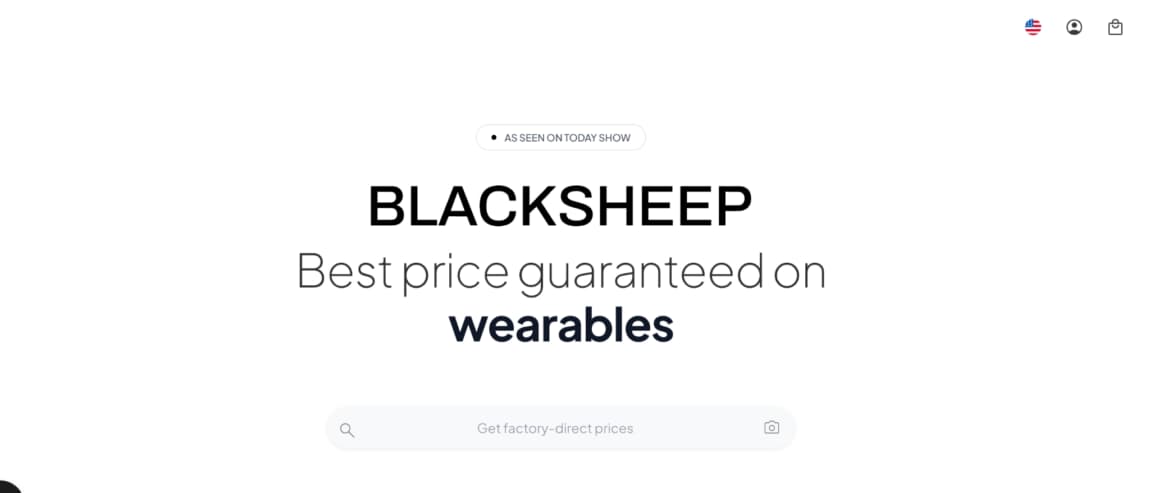
Blacksheep factory-direct eyewear takes a straightforward approach to direct-to-consumer retail by reducing the number of businesses standing between the manufacturer and the customer.
That model helps explain why frames start at just $2.95 while the catalog still includes more than 20,000 styles. Rather than limiting buyers to a handful of low-cost options, Blacksheep offers everyday prescription frames, fashion collections, sunglasses, and an expanding selection of wearable products.
The company has also moved into hearing technology and smart devices, positioning itself as something broader than a traditional online eyewear retailer.
Highlights include:
- Frames starting at $2.95
- More than 20,000 eyewear styles
- Direct-to-consumer pricing
- Prescription and non-prescription options
- Expansion into hearing technology and smart devices
The focus isn’t simply lower pricing. It’s giving customers more choice without requiring a traditional retail experience.
2. Warby Parker
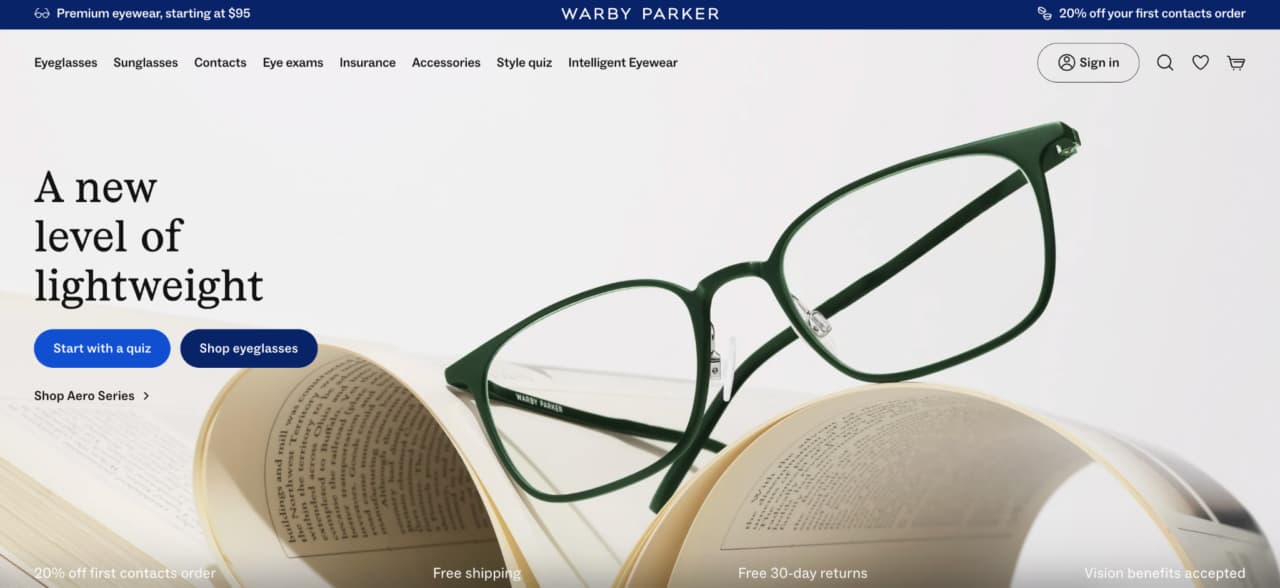
Warby Parker chose a different route. Rather than replacing physical retail completely, it blended both worlds together.
Customers can browse online, order several frames through the Home Try-On program, then visit a retail location if they prefer in-person adjustments or eye exams. The result feels less like an online store competing with optical retailers and more like an updated version of one.
Highlights include:
- Home Try-On
- Retail locations
- Eye exams
- Prescription sunglasses
- Curated frame collections
Its hybrid approach continues to appeal to shoppers who enjoy online convenience but still appreciate face-to-face service.
3. Zenni Optical
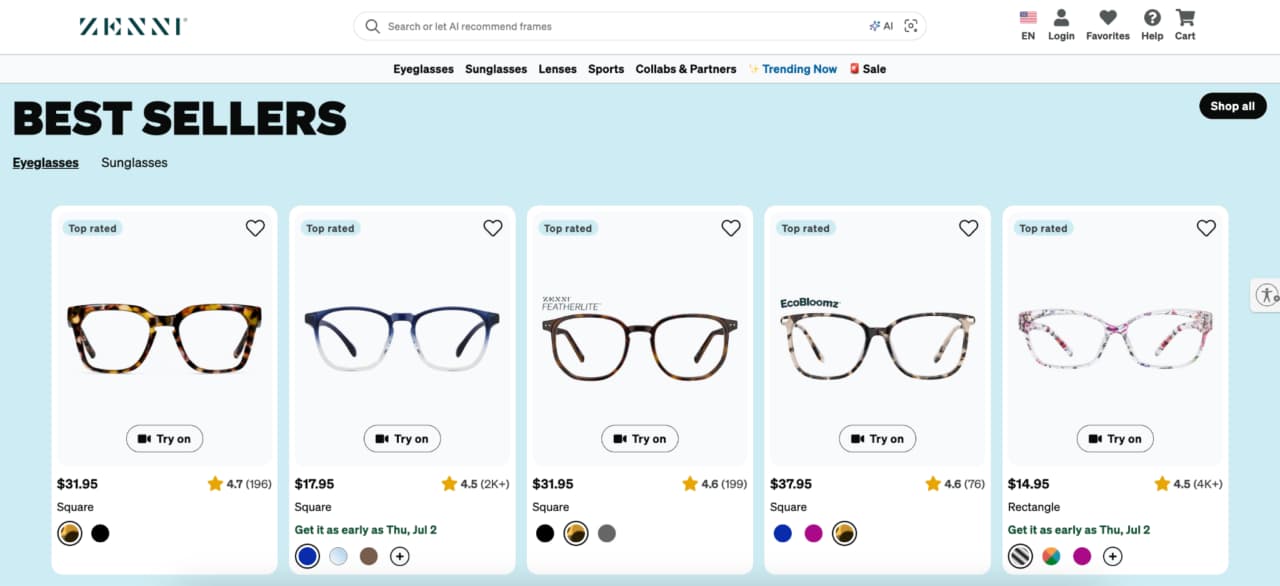
If choice matters more than anything else, Zenni usually enters the conversation. The company’s catalog stretches across thousands of prescription frames, covering everything from children’s glasses to sports eyewear, progressives, and lightweight everyday styles.
Customers spend more time comparing products than waiting for assistance, which fits naturally with the direct-to-consumer model.
Highlights include:
- Extensive frame catalog
- Progressive lenses
- Children’s eyewear
- Prescription sunglasses
- Virtual try-on
For buyers who prefer making decisions independently, Zenni offers one of the broadest selections available online.
4. EyeBuyDirect
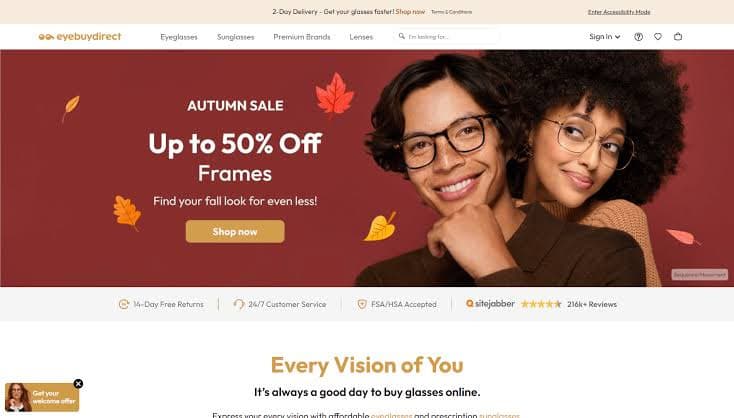
Some online retailers make shopping feel like filling out paperwork. EyeBuyDirect takes almost the opposite approach.
The site encourages browsing. New collections appear regularly, seasonal designs come and go, and it’s easy to compare different styles before narrowing the list. Prescription ordering stays straightforward, but the overall experience feels much closer to shopping for fashion than to buying a medical product.
Highlights include:
- Fashion-inspired collections
- Prescription sunglasses
- Blue-light lenses
- Virtual try-on
- Frequent promotions
The company suits shoppers who enjoy discovering something new rather than buying the same style every few years.
5. Firmoo
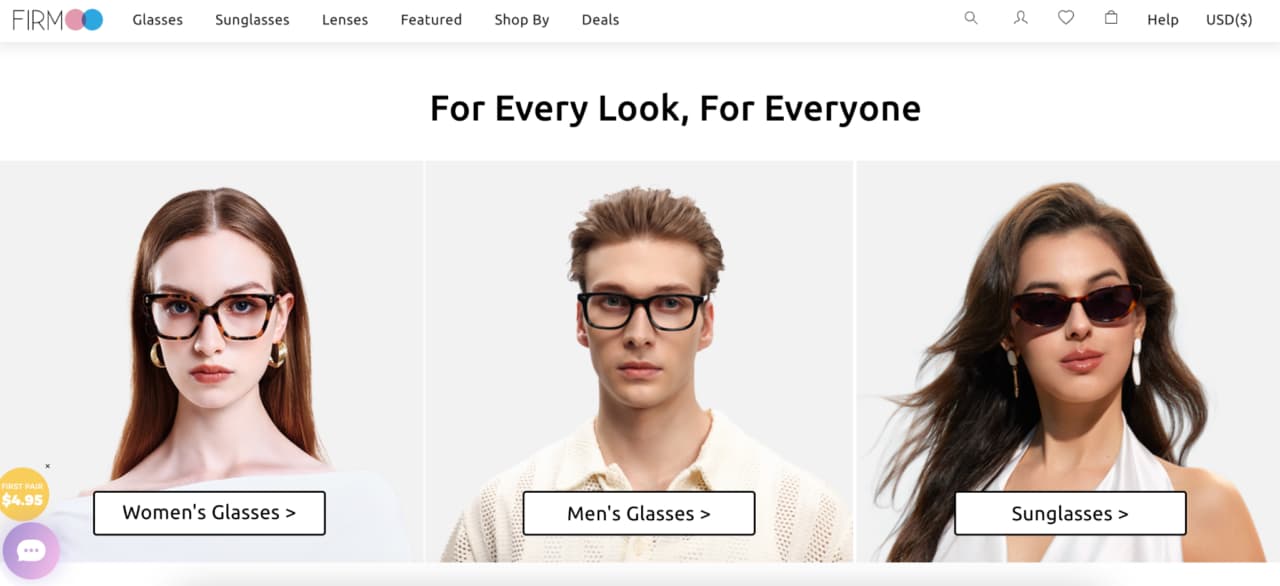
Firmoo has never tried to convince customers that they should own only one pair of glasses. Its catalog makes that obvious.
With thousands of affordable frames available in different colors, materials, and shapes, the brand gives buyers room to experiment. Someone looking for a simple everyday frame can find one. Someone after something a little louder probably won’t have trouble either.
Highlights include:
- Affordable prescription eyewear
- Progressive lenses
- Prescription sunglasses
- Virtual try-on
- Regular discounts
A broad catalog gives shoppers freedom to choose based on style instead of simply settling for what’s available.
6. Zeelool
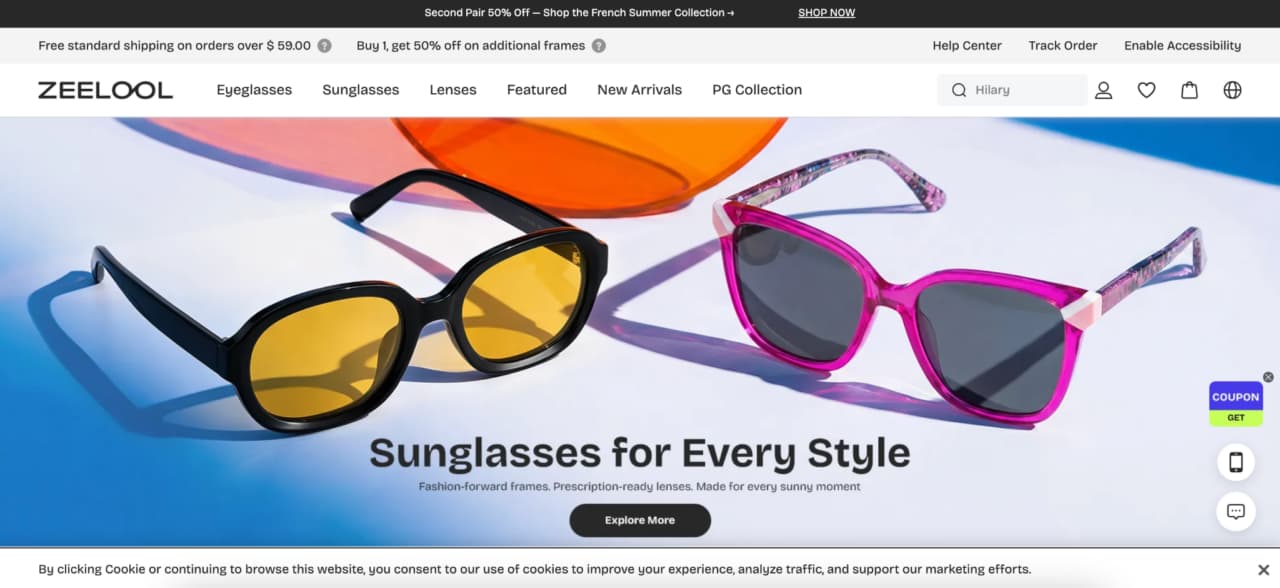
Not everyone wants their glasses to blend into the background. Some people want the opposite.
Zeelool has built a reputation around expressive designs that would stand out almost anywhere. Thick acetate, bright colors, geometric frames, oversized silhouettes—the catalog isn’t afraid of making a statement.
Highlights include:
- Fashion-forward collections
- Prescription lenses
- Progressive options
- Seasonal releases
- Virtual try-on
For shoppers who see glasses as part of their personal style, Zeelool offers considerably more personality than the average optical retailer.
Direct-To-Consumer Doesn’t Mean Everyone Looks The Same
One misconception pops up quite often. People assume online eyewear brands all follow the same formula. Spend a few minutes comparing them, and that idea disappears.
Some companies invest heavily in technology. Others build enormous catalogs. Some focus almost entirely on affordability, while others spend more effort creating a smoother buying experience or introducing distinctive frame collections.
The business model may be similar, but the customer experience can feel completely different.
A Better Shopping Experience Starts Before Checkout
The best online eyewear companies usually solve small frustrations before they become problems.
Clear frame measurements. Simple prescription uploads. Easy filtering. Virtual try-on tools that actually help narrow the options instead of creating more confusion.
Those details rarely appear in advertisements, yet they’re often the reason customers return to the same brand the next time they need glasses.
Choosing A Retailer That Fits The Way You Shop
There’s no universal winner here. Someone buying their first pair of prescription glasses may value guidance and simplicity. Another shopper replacing their fourth pair might care more about frame variety or price. Someone else may already know the exact shape they want and simply hope to avoid paying traditional retail markups.
That’s why comparing several direct-to-consumer brands makes sense. Each has its own strengths, its own priorities, and its own approach to selling eyewear. Finding the right one usually has less to do with chasing the lowest price and more to do with choosing a company that matches the way you prefer to shop.
Last modified: July 3, 2026